
Your car's electrical system starts with the battery and alternator, which keep everything powered and charged while the engine runs. From there it branches out through wiring, fuses, relays, and sensors to run everything from your headlights to your power windows, your radio, and the computer that controls the engine itself. Problems start small, like a corroded battery terminal or a cracked wire tucked behind a panel, and show up in odd ways. A dome light that won't turn off can quietly drain the battery overnight, leaving you with a car that won't start the next morning even though nothing seemed wrong the day before. Age, moisture, and vibration are the usual culprits behind wiring and connector problems, since they slowly work connections loose or let corrosion creep in where you can't see it.
Signs You Have an Electrical Problem
- Car clicks but won't crank when you turn the key
- Dashboard lights flicker or dim when you use the A/C or headlights
- Battery keeps dying even after a jump
- Power windows or locks work sometimes and not other times
- Dashboard warning lights come on for no clear reason
- Headlights or interior lights are dimmer than they used to be
When a car comes in with an electrical complaint, we check the battery and charging system first since that's the root of most issues we see. We test battery voltage at rest and again while cranking, then check the alternator output to confirm it's actually charging the way it should. A battery can read fine sitting still and still fail under load, so testing both matters. From there we check fuses and look for obvious corrosion or damage at connectors, since a blown fuse or a greened-up terminal is an easy thing to miss but an easy thing to fix. If the issue is more specific, like one circuit not working while everything else runs fine, we trace that wiring with a meter to find exactly where the break or short sits instead of guessing and swapping parts.
The repair depends entirely on what we actually find once we've tested things. A corroded terminal is a quick clean and tighten, and that alone solves more no-start complaints than people expect. A dead battery that won't hold a charge anymore is a straightforward swap once we confirm it's actually the battery and not the alternator feeding it. A failing alternator means pulling the old one and putting in one that charges properly, then running the system afterward to confirm it's holding a steady charge under load. If the issue is a short or a break somewhere in the wiring itself, that takes more time, since we have to trace the circuit end to end, find the exact spot where it fails, and repair or replace that section without disturbing the wiring and connectors around it.


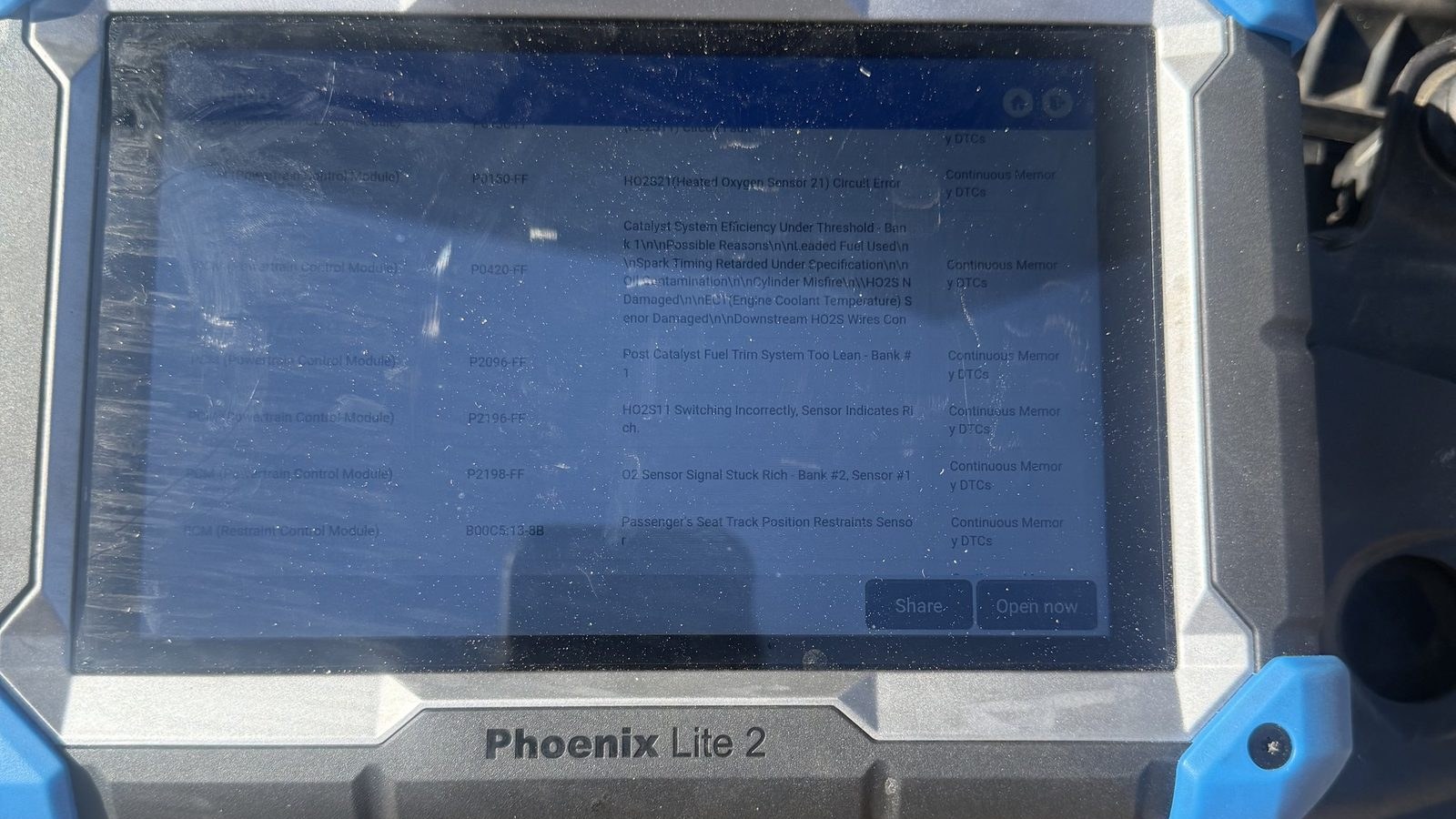
What makes an electrical job bigger or smaller mostly comes down to how hidden the fault is. A bad battery or a weak alternator is easy to find, since the test results point right at it. A short that only shows up when the car hits a bump, or only when it's humid out, takes longer to track down because it won't show itself every time we test the circuit. That kind of intermittent fault means wiggling wires, checking connectors under different conditions, and sometimes driving the car to recreate what's happening. Older wiring harnesses with multiple corroded connections also take more time, since there can be more than one issue hiding at once, and fixing the first one won't necessarily explain the whole complaint.
Electrical faults often give small warning signs before they turn into a car that won't start at all. Flickering interior lights, a radio that resets itself, power windows that move slower than they used to, or gauges that jump around are all worth paying attention to. These symptoms point toward a charging system problem or a loose connection somewhere in the circuit feeding that component. Catching these early usually means a simpler fix, like a terminal cleaning or a fuse check, instead of a full wiring trace down the road. Waiting until the car won't start at all just means the diagnosis starts from a harder spot, since there's no symptom left to watch and narrow things down with.
A battery that keeps dying over and over is a sign something else is wrong, not just the battery itself. It could be a parasitic draw from something staying on when it shouldn't, like that dome light, or it could be a charging system that isn't keeping up with normal use. Until it's sorted, try not to keep jumping a battery that keeps dying, since that puts strain on the starter and alternator too, and can turn one problem into two or three. Each jump start asks components that are already struggling to work harder than they're built for, and that strain adds up fast on parts that were fine to begin with.
Some electrical symptoms are more urgent than others and shouldn't wait for a convenient day. If you notice a burning smell or smoke from anywhere in the car, from under the dash, near the engine bay, or around the battery itself, stop driving it and get it looked at right away rather than waiting to see if it happens again. Burning smells usually mean a wire is overheating somewhere, and that can turn into a bigger problem fast if it's ignored. We work on cars throughout Fort Worth and nearby towns like River Oaks, Sansom Park, Westover Hills, Haltom City, and Lake Worth, and electrical issues are one of the more common reasons people call us out, since it's hard to tell from the driver's seat whether the fix is simple or something that needs a closer look.
What to Tell Us When You Call
- Year, make, and model of the car
- What's acting up, like lights, windows, or starting
- Whether it happens all the time or only sometimes
- Any recent battery jumps, repairs, or warning lights

 Supercanic