
Modern engines run on a web of sensors that control fuel, air, and spark. Everything from the throttle to the oxygen sensors feeds data back to the engine computer, which adjusts things in real time to keep the engine running smooth. When one of those sensors drifts out of range or a part starts failing, the computer logs a code and usually turns on the check engine light. The light itself does not tell you what is wrong, it just tells you something needs a closer look. Ignoring it can let a small problem turn into a bigger one, like a misfire that eventually damages the catalytic converter, which is a far more expensive fix than the sensor or coil that caused it in the first place.
Signs You Need Engine Diagnostics
- Check engine light is on or blinking
- Engine shakes or idles rough
- Car hesitates or jerks when you accelerate
- Noticeably worse gas mileage than usual
- Engine stalls at stops or while idling
- Strange smells like gas or burning coming from under the hood
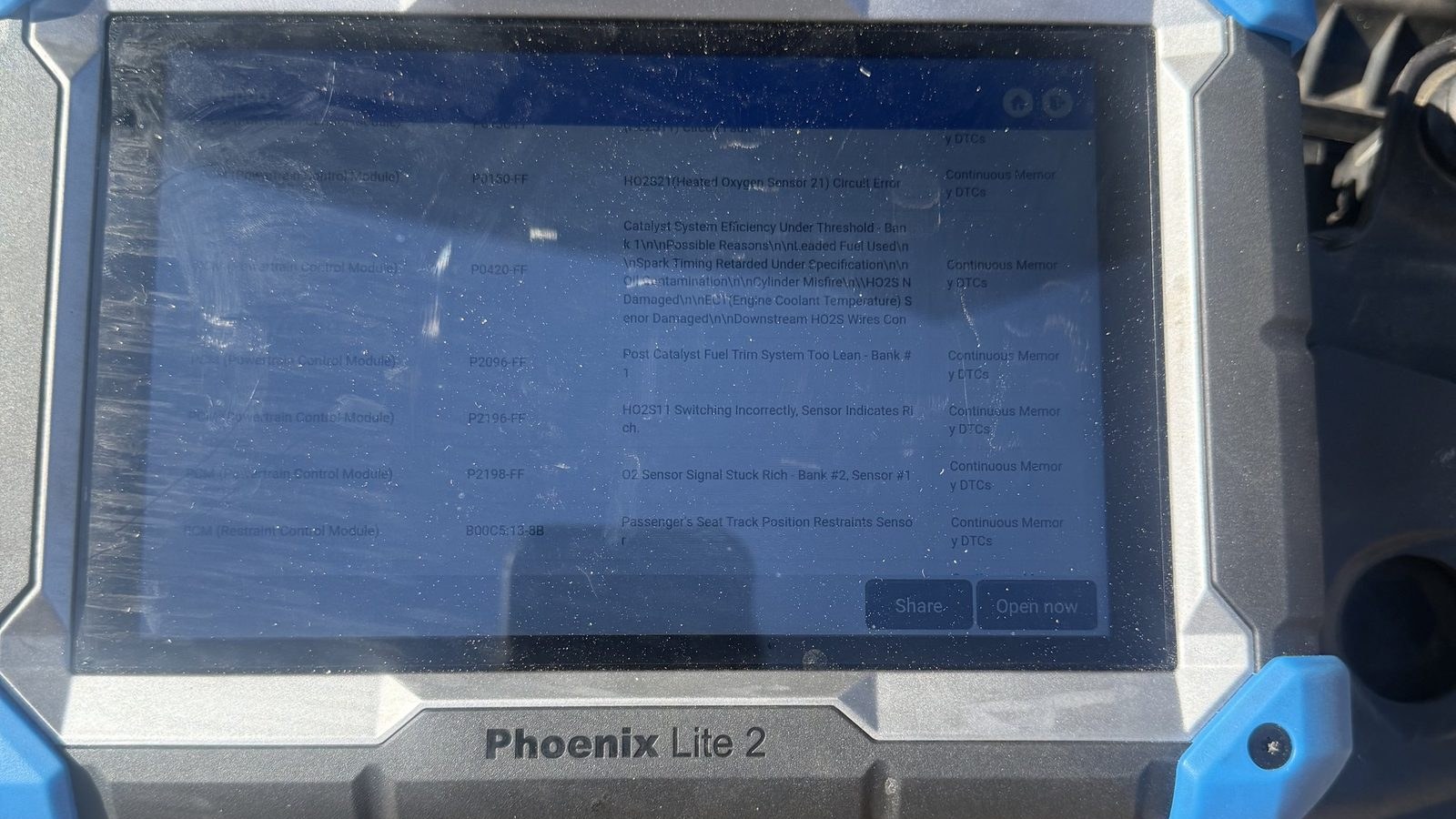
We start by pulling the codes stored in the engine computer and reading the live data coming from the sensors while the engine runs. Codes point us in a direction, they do not always name the exact part. A code for a lean fuel condition could mean a vacuum leak, a dirty sensor, or a fuel delivery problem, so we do not just swap parts and hope. We check things like fuel trims, misfire counts, and sensor voltage to narrow down whether it is a sensor, a vacuum leak, an ignition issue, or something else before touching any parts. This step matters because guessing wrong means paying for a part that was never the problem.
Once we know what we are dealing with, we explain what we found and what it would take to fix it. We walk through it in plain language, not code numbers, so you understand what is actually failing and why. Some fixes are simple, like replacing a sensor or a coil, and those tend to clear up fast once the part is swapped. Others take more digging, like chasing down an intermittent electrical issue or a vacuum leak that only shows up under certain conditions, say when the engine is hot or under load. We test again after the repair to confirm the code clears and does not come back under normal driving, since a code that disappears for a day can still return once conditions change.


The size of the job depends on what is actually failing. A single bad sensor is usually a straightforward fix once we confirm it is the actual cause. A wiring issue, a failing fuel pump, or a problem with timing components takes more time to track down and repair, since wiring faults can hide anywhere along a harness and timing issues often mean more disassembly to inspect. Intermittent problems that only happen sometimes can also take longer since we may need to see the issue happen before we can confirm the fix worked. That might mean a test drive under the same conditions that triggered the original light, whether that is highway speed, cold starts, or stop and go traffic.
If your check engine light is on, try to avoid hard acceleration or towing until it is checked. Pushing the engine hard while something is already misbehaving can turn a minor issue into a bigger repair, especially if the problem involves fuel mixture or ignition timing. A blinking check engine light is more urgent than a steady one and usually means the engine is misfiring badly enough to damage the catalytic converter in real time. A steady light means get it looked at soon, a blinking light means stop driving and get it looked at right away. Treating these two signals the same is one of the more common mistakes people make with a dashboard warning.
Write down anything odd you noticed, like when it happens or any smells or sounds, since that helps narrow things down before we even hook up a scanner. Does the light come on only after the car sits overnight, or only on the highway, or only when it rains. Do you smell fuel, hear a ticking noise, or notice the engine shake at idle. These small details often point straight at a system, whether that is fuel, ignition, or something mechanical, and they can save time during the diagnostic process. A rough idea of when the problem started, like after an oil change or a cold snap, can also be useful.
Engine diagnostics covers a wide range of problems, and it often overlaps with other systems we work on, like electrical faults or issues tied to the heating and A/C system. A code related to a cooling fan or a blower motor circuit might actually trace back to a wiring or sensor problem rather than the component itself. That is why we read the live data and trace the actual cause instead of just reacting to whichever code popped up first. Getting the check engine light handled early, rather than letting it sit for weeks, usually means a smaller job and less chance of a simple sensor turning into something that affects the catalytic converter or the engine's timing components.
What to Tell Us When You Call
- Year, make, and model of your car
- Whether the check engine light is steady or blinking
- Any symptoms like rough idle, stalling, or hesitation
- Where your car is located in or around Fort Worth

 Supercanic